
By Radiance Advisor | Independent Cosmetic Research Writer

Your scalp and your ends aren’t the same hair. They’re not supposed to be treated the same way.
— Radiance Advisor
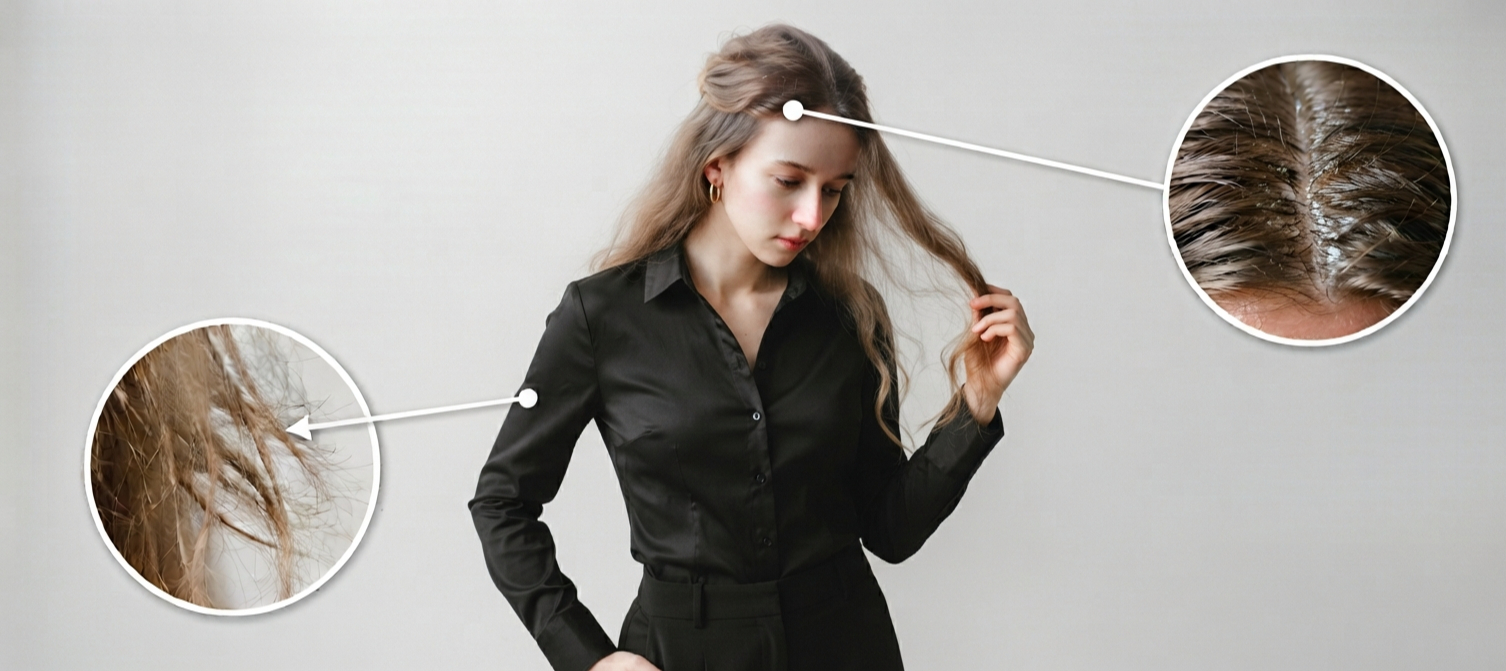
If your roots get greasy fast while your ends still feel dry and rough, that’s not two separate problems. It’s one real pattern, and it happens because your scalp and your hair ends are genuinely different environments.
Why This Actually Happens
Oil comes from your scalp, not your hair. A peer-reviewed review on hair cosmetics confirms that sebum, the natural oil your scalp produces, struggles to travel down the length of the hair shaft on its own (source). That’s why your roots can be soaked in oil while your ends barely get any at all.
Your ends have a second problem working against them too. They’re the oldest part of your hair, they’ve been through the most brushing, heat, and sun exposure. Research on hair cuticle damage confirms this wear builds up over time and makes hair progressively less resistant to daily stress (source).
So your roots are flooded with oil they can’t share, and your ends are worn down with barely any oil reaching them at all. Same head, two different environments.
The Mistake That Makes Both Worse
When roots feel oily, the instinct is to wash more often. But washing too much strips the scalp, and a stripped scalp responds by making even more oil to compensate. The American Academy of Dermatology specifically recommends applying shampoo to the scalp, not the full length, and keeping conditioner on the ends only, not the roots.
| What It Does | At the Roots | At the Ends |
|---|---|---|
| Real problem | Too much oil | Too little moisture |
| What helps | Gentle, scalp-focused cleansing | Rich, moisture-focused conditioning |
| What makes it worse | Heavy conditioner applied here | Skipping conditioner here |
The Fix
Shampoo the scalp, not the whole length
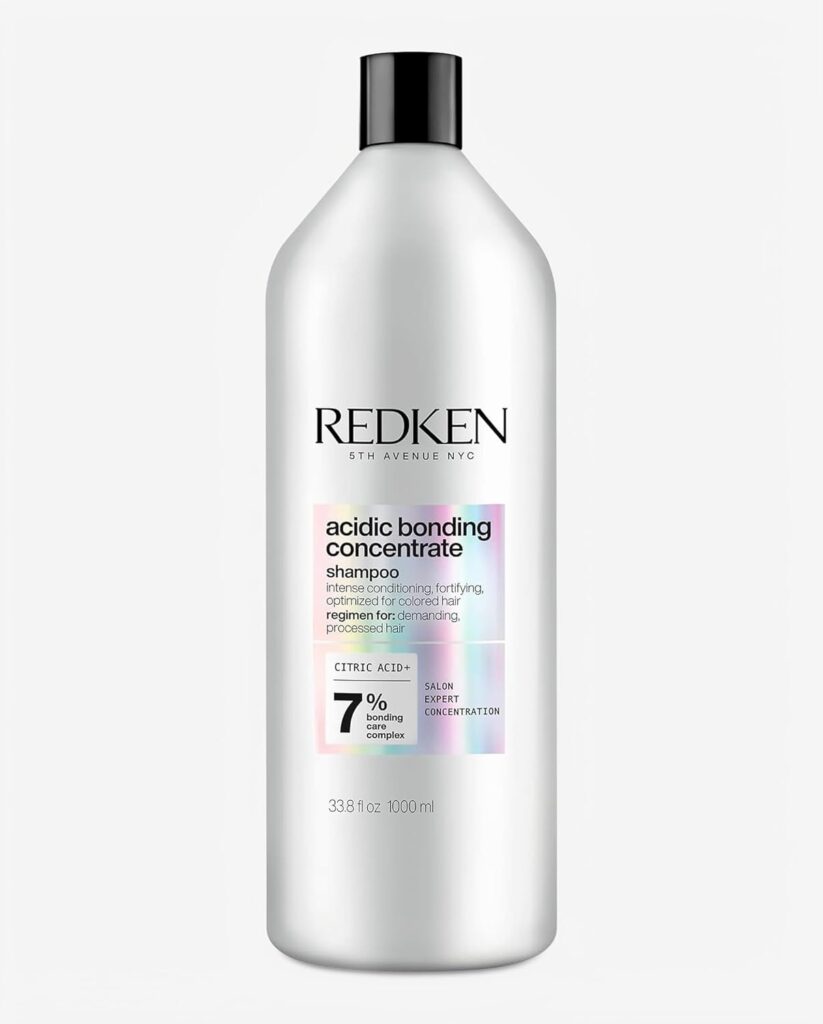
We recommend Redken Acidic Bonding Concentrate Shampoo. It’s sulfate-free, so it cleanses without stripping your scalp as harshly, which matters since over-stripping is exactly what triggers more oil production. Focus it on your scalp and roots, and let the rinse-down clean the rest of your hair lightly, don’t scrub shampoo into your ends.
Condition the ends, not the roots
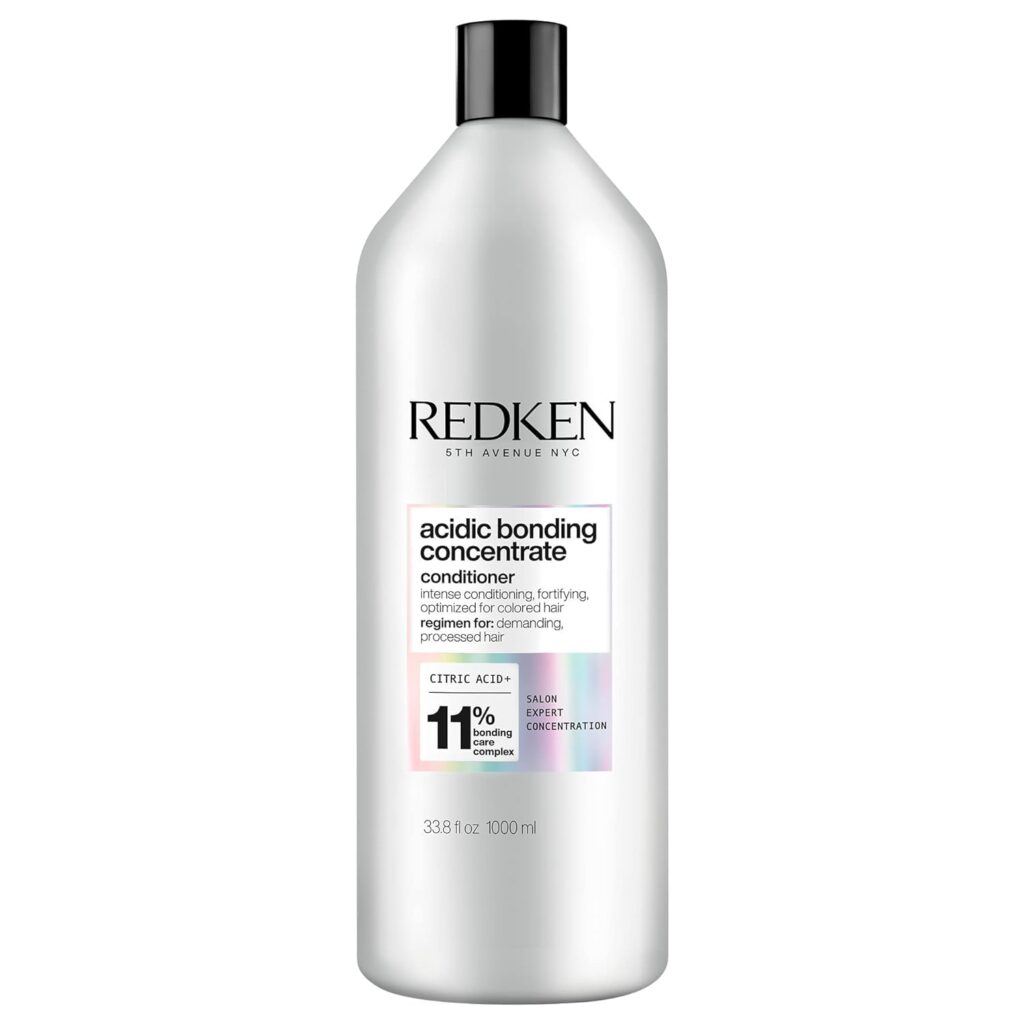
We recommend Redken Acidic Bonding Concentrate Conditioner. Apply it from mid-length to ends only, keeping it away from your scalp entirely. This gives your ends the moisture they’re not getting naturally, without adding extra oil to a scalp that already has plenty.
Frequently Asked Questions
Q: How often should I wash if I have this combination?
There’s no universal number, it depends on how quickly your specific scalp gets oily. Wash based on how your roots actually look and feel, not a fixed schedule.
Q: Can one shampoo and conditioner really work for both problems?
Not usually, and that’s the actual point. The fix isn’t one product doing two jobs, it’s using the same two products correctly, shampoo where the oil is, conditioner where the dryness is.
A Note on Our Approach
This is based on peer-reviewed research on hair cosmetics and cuticle aging, along with established dermatology guidance, with sources linked throughout for you to verify directly. If oiliness or dryness is extreme or sudden, a dermatologist can check for an underlying scalp condition.
Last updated: 01 September 2026