


By Radiance Advisor | Independent Cosmetic Research Writer

Oil that sits on your hair isn’t working for you. Oil that sinks into your hair is.
— Radiance Advisor
If hair oil or serum leaves you looking greasy instead of shiny, that’s not the product’s fault by default. It usually comes down to how much you use, which oil you use, and where you put it. All three have real, provable causes.
Why This Actually Happens
The amount of oil that can be absorbed by the hair is limited. This was proven scientifically through a study where microphotographs were taken of the hair strands to prove this point. It showed that when one uses an excessive amount of oil that cannot be absorbed by the hair strands, then there will be a formation of a layer of oil over the hair strands (source).
Not All Oils Absorb the Same Way
This next part matters just as much. Different oils absorb into hair at very different rates. A real study using advanced imaging technology compared coconut oil and mineral oil directly on human hair (source). It found that coconut oil soaks into the hair shaft, while mineral oil mostly stays on the surface.
This is because of the oil’s molecular structure, not the brand or the price. Some oils are simply built to SINK IN. Others are built to SIT ON TOP.
Oils That Sink In vs. Oils That Sit on Top
| What It Does | Penetrating Oils (coconut, argan) | Surface Oils (mineral oil, heavy silicones) |
|---|---|---|
| Where it goes | Absorbs into the hair shaft | Stays on the surface |
| Feel after a few hours | Light, natural | Heavy, greasy |
| Best for | Daily use, fine to medium hair | Occasional use, very coarse or dry hair |
The Second Mistake: Where You Put It
Even the right oil, used the right amount, can look greasy if it goes in the wrong place. Oil is meant for your mid-lengths and ends, not your scalp. Your scalp already makes its own oil. Adding more oil directly to your roots gives your scalp more oil than it needs, which is what actually causes that fresh-out-of-the-shower greasy look by midday.
How Much to Use, and Steps to Apply It
- For most hair lengths, use 1 to 3 drops
- For longer or thicker hair, use 3 to 5 drops
- Rub the oil between your palms first, don’t drip it directly onto your hair
- Run your hands through your mid-lengths and ends only, skip your scalp and roots
- If your hair feels wet or sticky right after applying, you used too much
The Fix
A lightweight option for everyday use
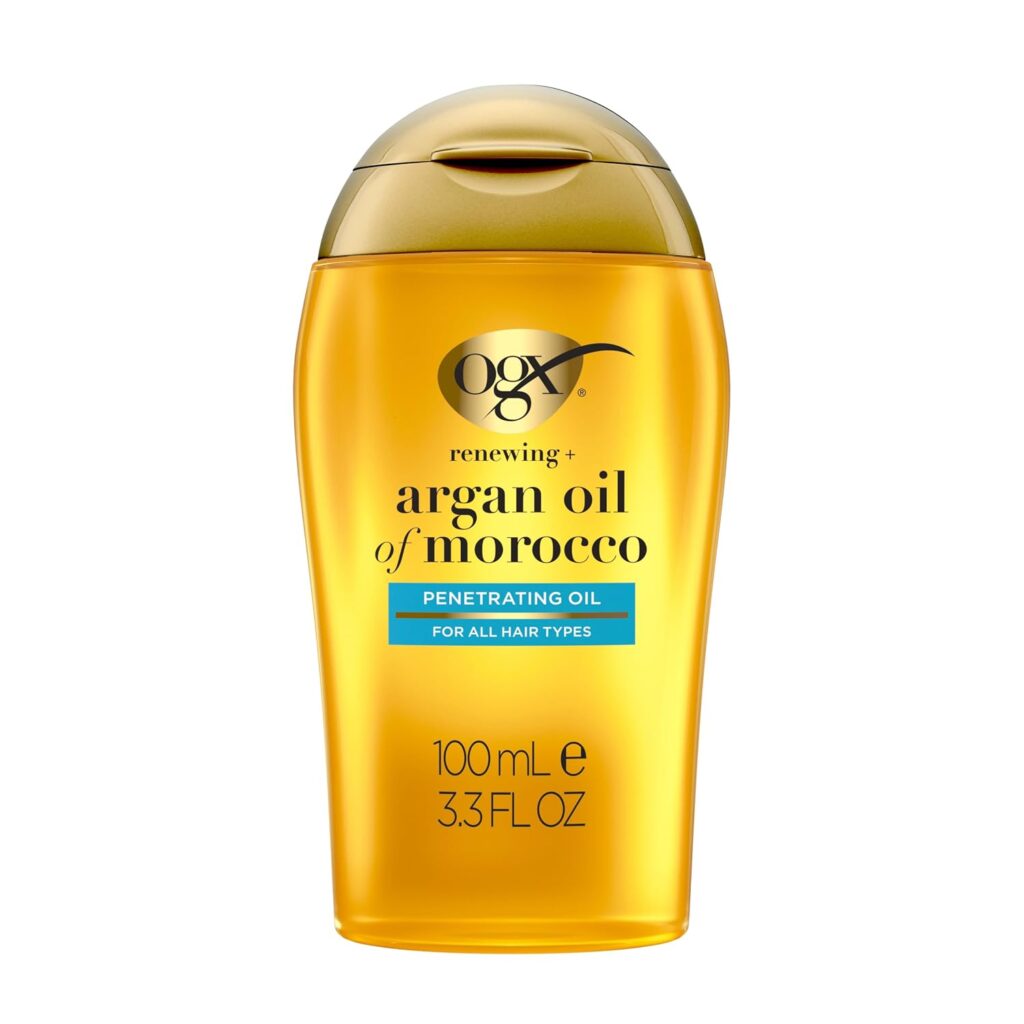
We recommend OGX Renewing Argan Oil of Morocco. It’s cold-pressed and specifically formulated as a penetrating treatment, not a surface coating, and it’s paraben and sulfate free. Use just a couple drops on damp or dry mid-lengths and ends.
A richer option built around fast absorption
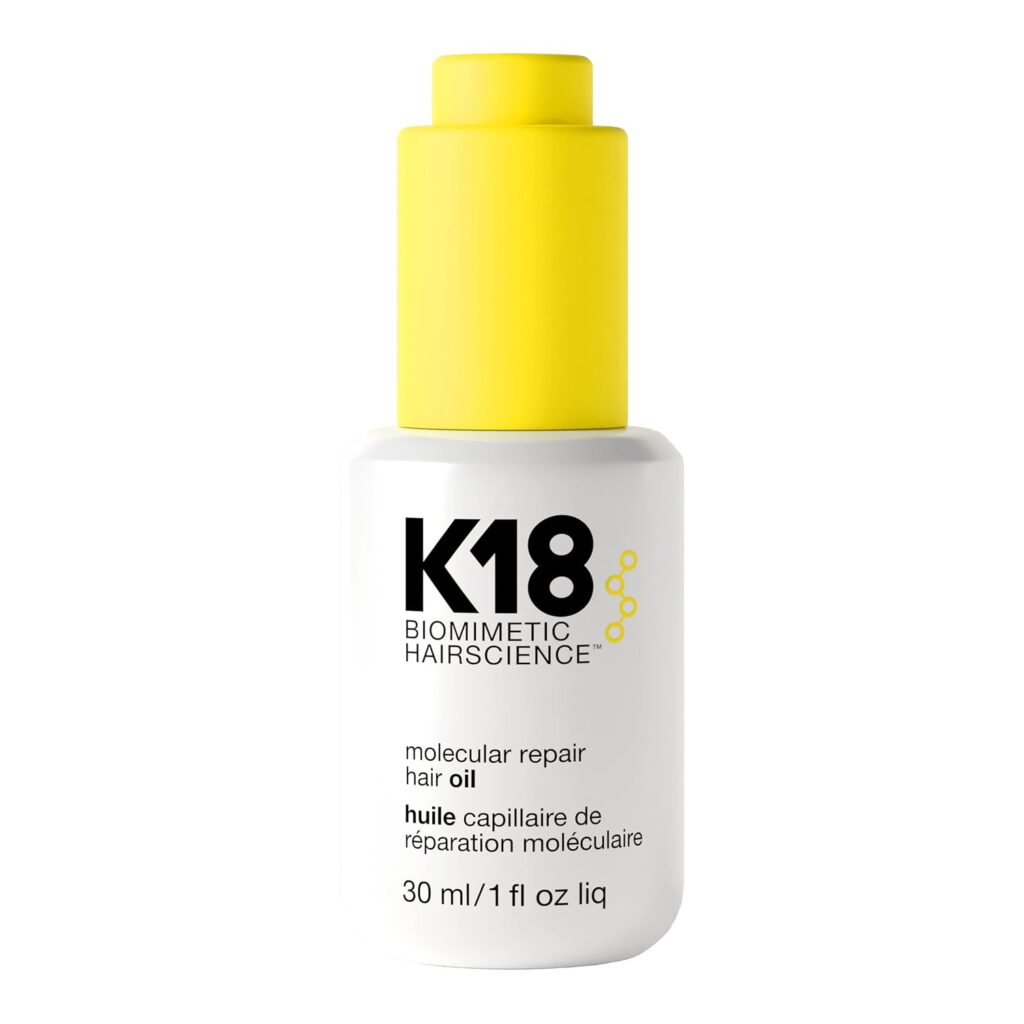
We recommend K18 Molecular Repair Hair Oil. It’s silicone-free, and the brand specifically designed it to be used in tiny amounts, just 1 to 3 drops, since the formula is built to absorb quickly rather than coat the hair.
Frequently Asked Questions
Q: Can I use hair oil every day?
Yes, if you’re using the right amount for your hair length and applying it away from your scalp. Daily use only becomes a problem when too much product builds up over time.
Q: Will washing my hair more often fix the greasy look?
Not really. If the real cause is too much oil or the wrong placement, washing more just resets the cycle. It doesn’t fix the actual mistake.
A Note on Our Approach
This is based on peer-reviewed research on hair oil penetration and film formation, with sources linked throughout for you to verify directly. If your hair feels consistently greasy even with correct use, a dermatologist or trichologist can check for an underlying scalp condition.
Last updated: August 2026