

By Radiance Advisor | Independent Cosmetic Research Writer
Seeing hair in your brush isn’t automatically a problem. It’s usually just your hair doing what it’s supposed to do.
— Radiance Advisor
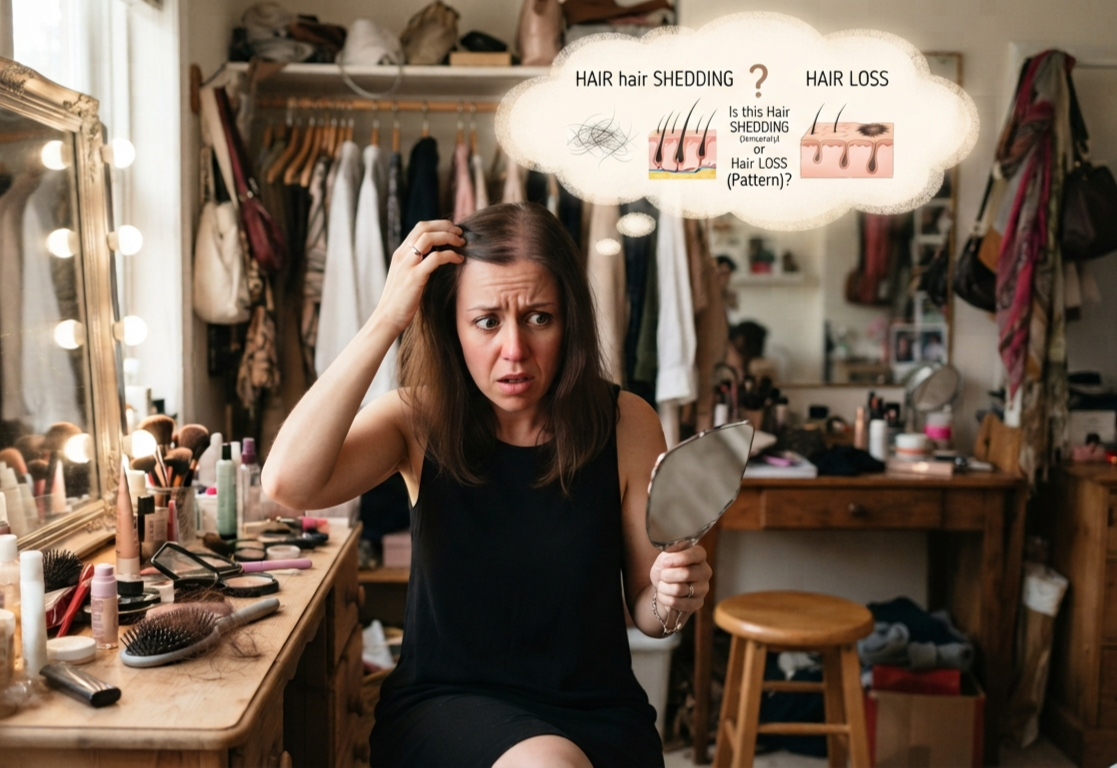
If you’ve noticed more hair than usual on your pillow or in the shower, take a breath first. In most cases, what you’re seeing is normal hair shedding, not hair loss. These are two genuinely different things, confirmed directly by the American Academy of Dermatology, and confusing them causes a lot of unnecessary worry.
The Real Difference
Hair shedding is part of your hair’s natural cycle. It’s normal to shed 50 to 100 hairs a day, and dermatologists note that up to 150 can still fall within a normal range for some people. Hair shedding usually stops on its own, especially if it follows a specific stressor like illness, major weight loss, or a stressful life event.
Hair loss is different. It happens when something stops hair from growing back properly, leading to visible thinning or bald patches over time. This needs a different kind of attention than shedding does.
How to Tell Which One You’re Experiencing
- Shedding: started after a specific event (illness, stress, childbirth, a crash diet), and you don’t see visibly thinning patches or a widening part
- Shedding: the hair count feels like “a lot” but your overall hair volume hasn’t visibly changed
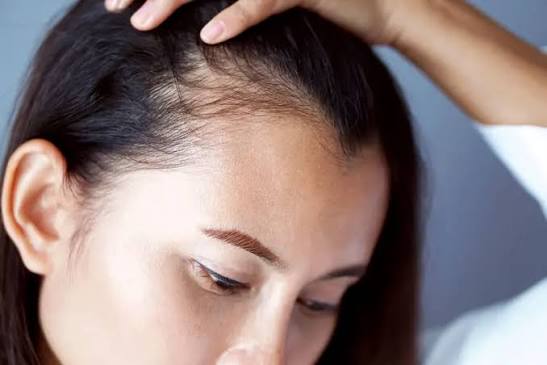
- Loss: you notice a widening part, visible thinning at the crown, or a receding hairline
- Loss: it’s been gradual and ongoing for months, not tied to one clear recent event
Shedding vs. Loss at a Glance
| What It Does | Normal Shedding | Hair Loss |
|---|---|---|
| Typical cause | A recent stressor (illness, stress, diet) | Genetics, hormones, or a medical condition |
| Usually resolves on its own | Yes, within 6 to 9 months | No, needs active treatment |
| Visible thinning or bald patches | Rare | Common |
| What helps | Time, and addressing the stressor | A proven treatment, and often a dermatologist |
The Fix, for Shedding
If your situation matches normal shedding, the honest answer is that time is the main thing that helps, most shedding resolves on its own once your body adjusts. In the meantime, gentle hair care matters, avoid tight hairstyles, harsh brushing, and excessive heat styling, all of which put extra stress on hair that’s already shedding more than usual. If a specific stressor is ongoing, like chronic stress or an unresolved health issue, addressing that directly is more effective than any hair product.
The Fix, for Genuine Hair Loss
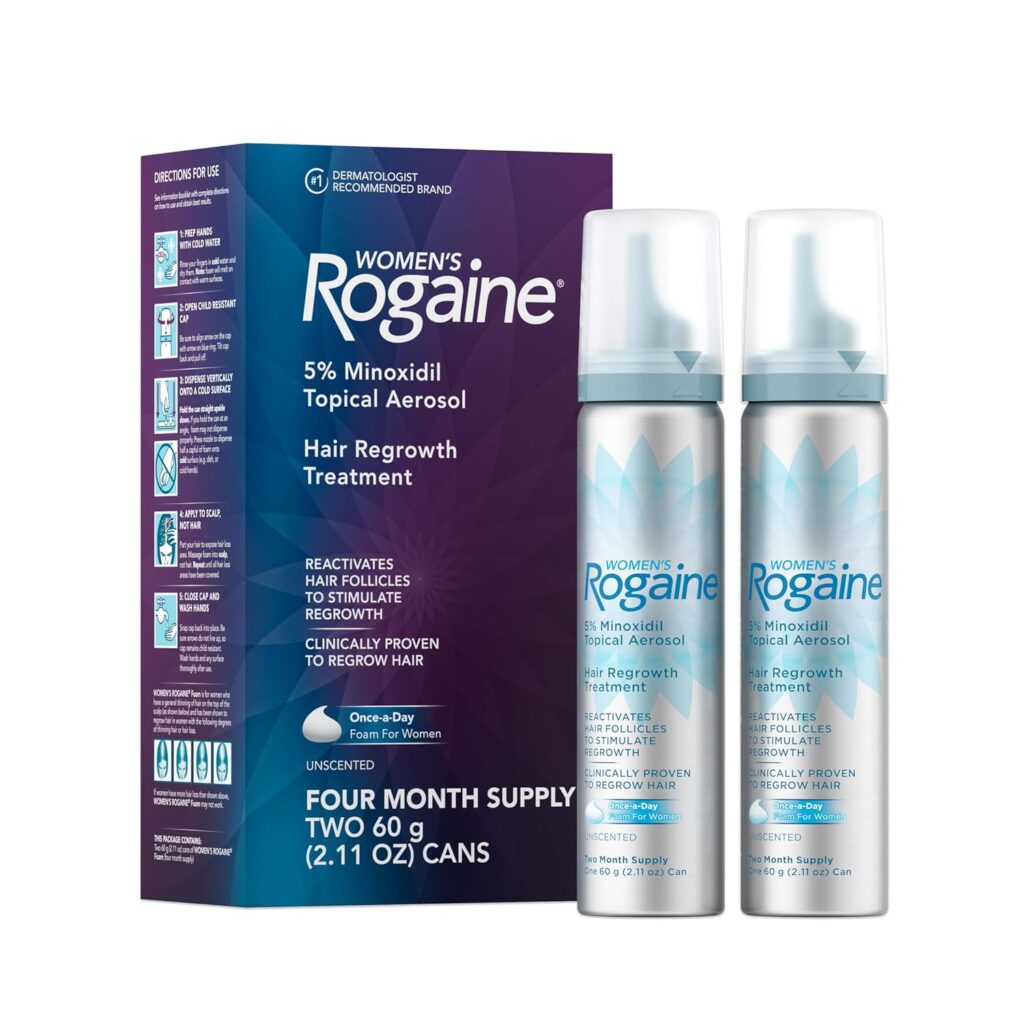
If your situation matches genuine hair loss, the product with the strongest real evidence behind it is Rogaine Women’s 5% Minoxidil Foam, or the men’s equivalent formula.
Why this specific product, and not just any minoxidil product. Minoxidil is the only over-the-counter ingredient approved by the FDA specifically for hair regrowth, and Rogaine was the original brand to bring it to market, holding that position for over three decades. That matters because it means this formula has been tested, refined, and used far longer than most competitors on the shelf.
What the actual science shows. This is the same 5 percent concentration studied directly in a randomized, placebo-controlled clinical trial. Compared to a lower 2 percent concentration, the 5 percent formula produced 45 percent more hair regrowth over 48 weeks (source). This isn’t a brand claim pulled from marketing, it’s a measured result from a real clinical trial.
What real users report. Independent review data from WebMD shows 117 documented user reviews, with genuine, mixed feedback rather than an artificially perfect score, exactly what you’d expect from an honest sample of real experiences. Many of the detailed reviews describe a consistent pattern: noticeable new growth around the hairline within the first one to two months, with fuller coverage in more stubborn areas like the crown taking longer, generally in the 3 to 6 month range. That timeline matches what the clinical research itself found.
How to actually use it. Apply it once daily to a dry scalp, consistency matters more than the amount, using more than directed doesn’t speed up results. Most people need at least 8 to 16 weeks before seeing a visible difference, and results only continue for as long as you keep using it. One honest note: a small number of users report scalp irritation or dryness, if that happens, a dermatologist can help you find an alternative approach or formulation.
Frequently Asked Questions
Q: When should I actually see a doctor?
If you notice a widening part, visible bald patches, or thinning that’s gradual and ongoing rather than tied to a recent stressor, that’s worth a real evaluation, not just a wait-and-see approach.
Q: Can shedding turn into permanent hair loss if I ignore it?
Typically no, shedding tied to a temporary stressor resolves once your body recovers. But if the underlying cause is ongoing and unaddressed, it’s worth checking with a doctor rather than assuming it will resolve indefinitely.
A Note on Our Approach
This is based on peer-reviewed research and guidance from the American Academy of Dermatology, with sources linked throughout for you to verify directly. Hair loss can have many underlying causes, including medical conditions that need a doctor’s evaluation, this article is not a substitute for that.
Last updated: September 2026