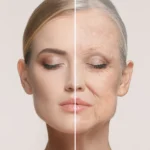

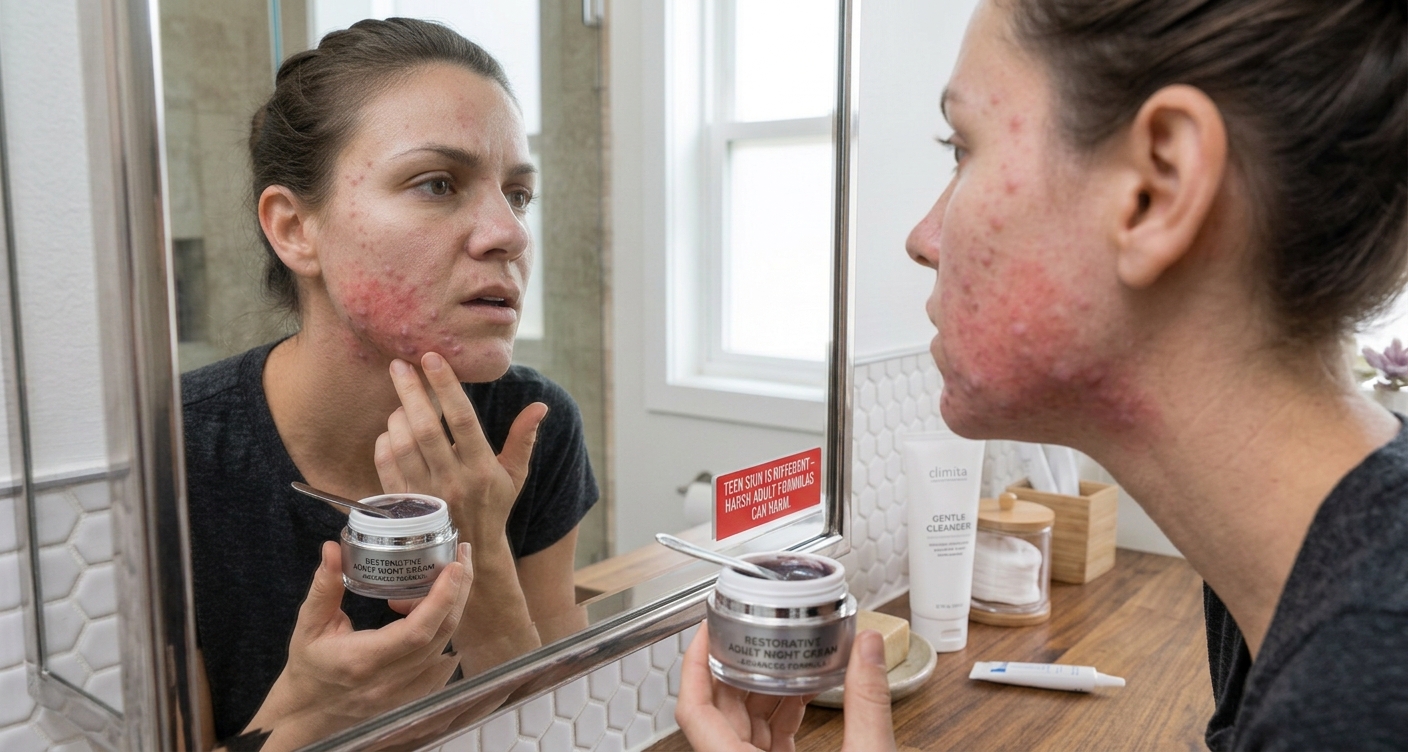
The skin of teenagers is still maturing, meaning that its defense mechanism against the environment is not as efficient as that of adults, and using effective anti-acne products designed for mature skin can do more harm than good.
Why Teen Skin Needs a Different Approach
While an adult’s skin is already used to defending itself from external factors, the skin barrier of a teenager is yet to form. Therefore, something that is perfectly safe to use by a 30-year old person may cause a teenager’s skin to peel and become red, flaky, and irritated instead of cleansing it.
It is not that teenage skin is less tough. It simply means that the skin is younger and will react well when gradually introduced to harsher substances.
Signs a Product Might Be Too Strong
- Your skin keeps peeling for more than a week
- Redness spreads to places that didn’t even have a pimple
- It stings or burns every single time you use it
- Your skin looks worse, not better, after a couple weeks
The Safer Approach
Step 1: Start with a gentle, non-drying cleanser
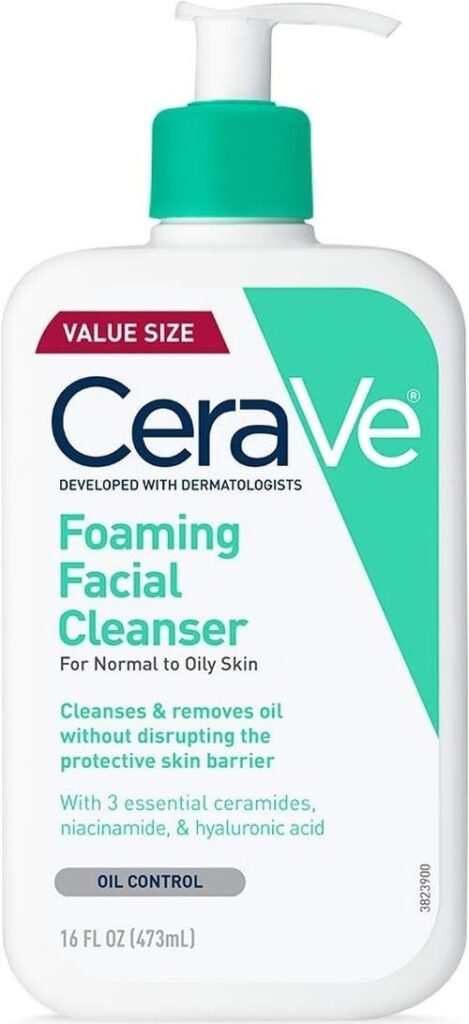
We recommend CeraVe Foaming Facial Cleanser . It’s fragrance-free and combines ceramides with niacinamide, ceramides support the skin barrier while it’s still developing, and niacinamide helps calm inflammation without being harsh. Use it once or twice daily, morning and night.
Step 2: Add a low-strength retinoid, slowly
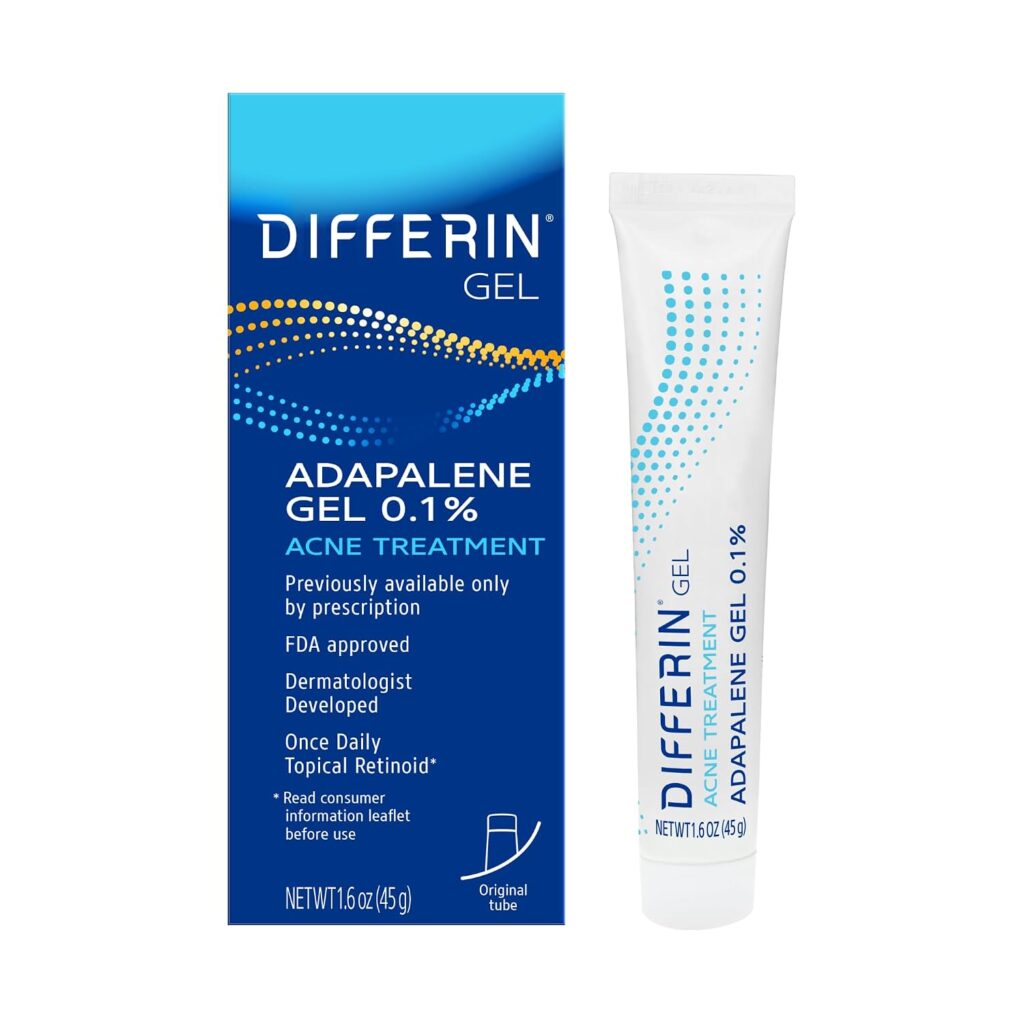
We recommend Differin Gel, 0.1% Adapalene . This is genuinely the gentlest retinoid strength available without a prescription, and it’s specifically the one most commonly recommended for teen skin. Start with every other night, not daily, this gives skin time to adjust instead of overwhelming it right away.
Step 3: Use a lower-strength benzoyl peroxide for active breakouts
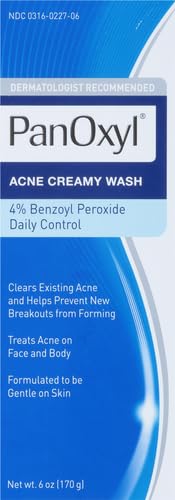
We recommend PanOxyl Hydrating Creamy Wash, 4% Benzoyl Peroxide . Notice this is 4%, not the 10% strength found in many drugstore products, the lower strength still fights acne-causing bacteria but with far less risk of over-drying developing skin. Use it 2 to 3 times a week, not daily, alongside the gentle cleanser above.
A Note on Our Approach
This is based on verified ingredient research and dermatology guidance on teen skin specifically, not personal testing. If acne is severe, painful, or leaving scars, that’s worth bringing to a dermatologist directly, some cases genuinely need a prescription-strength approach that over-the-counter products can’t fully address.

The goal isn’t the strongest product. It’s the right strength for skin that’s still growing.
— UNKNOWN
Last updated: August 2026