

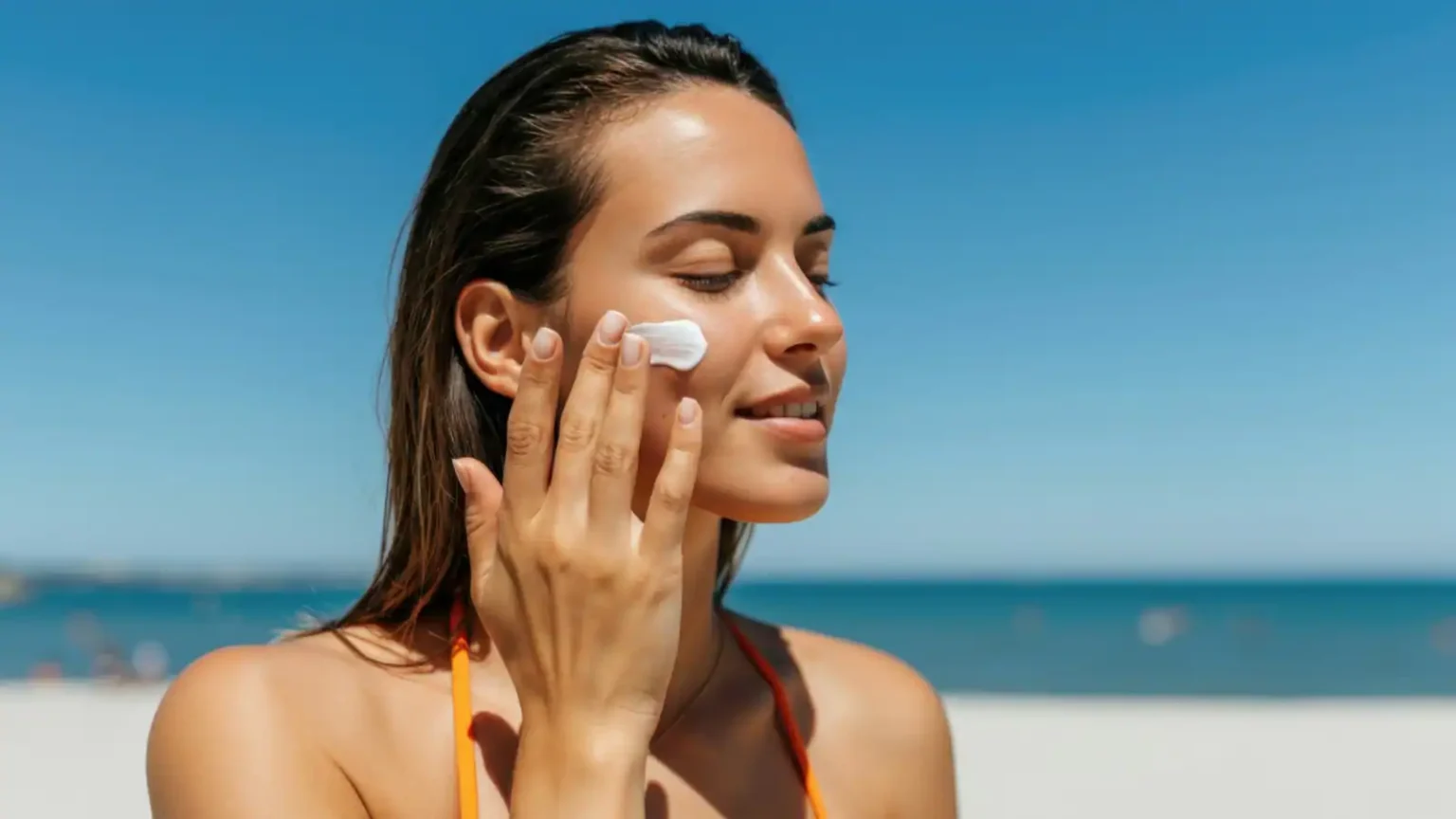
By Radiance Advisor | Independent Cosmetic Research Writer
White cast isn’t a flaw in your skin. It’s physics, and physics has a fix.
— Radiance Advisor
Have you ever used a sunscreen that claims to be “clear,” only to see it turn chalky or gray? This is not due to some strange coincidence and certainly not a case of your skin malfunctioning; there is science behind this phenomenon.
Why This Actually Happens
Mineral sunscreens work using zinc oxide and titanium dioxide, particles that sit on top of your skin and physically block UV rays. A peer-reviewed study measuring this directly found that as zinc oxide concentration increases, skin appears measurably lighter, using a standardized brightness scale (source).
That whitening happens because of light scattering. The mineral particles reflect visible light in all directions, not just UV. On lighter skin, this scattered light blends in more easily. On deeper skin, the contrast is much greater, which is why the same formula can look “clear” on one person and visibly chalky, gray, or purple on another.
Why It’s Worse on Deeper Skin Tones
This isn’t a minor cosmetic detail, it’s a real, documented gap in how sunscreens have historically been formulated and tested. A dermatologist-reviewed source explains that scattered light from mineral particles creates a gray or ashy appearance specifically on darker skin, even in formulas marketed as “universal” or “invisible” (source).
There’s also a real, separate reason this matters beyond appearance. Research published in the Journal of the American Academy of Dermatology found that visible light can cause more noticeable, persistent hyperpigmentation than UVA alone, particularly in deeper skin tones. That means skipping sunscreen due to white cast doesn’t just affect how skin looks in the moment, it can leave deeper skin tones more exposed to the exact kind of light that worsens dark spots.
Regular Mineral vs. Tinted Mineral
| What It Does | Regular Mineral Sunscreen | Tinted, Iron-Oxide Mineral Sunscreen |
|---|---|---|
| Blocks UV rays | ✅ | ✅ |
| Scatters visible light | ✅ (causes white cast) | Reduced |
| Blends across skin tones | ❌Often poor | ✅ Designed for this |
| Helps with visible-light pigmentation | Limited | ✅ |
The Fix
Step 1: Try a tinted mineral formula built to offset white cast
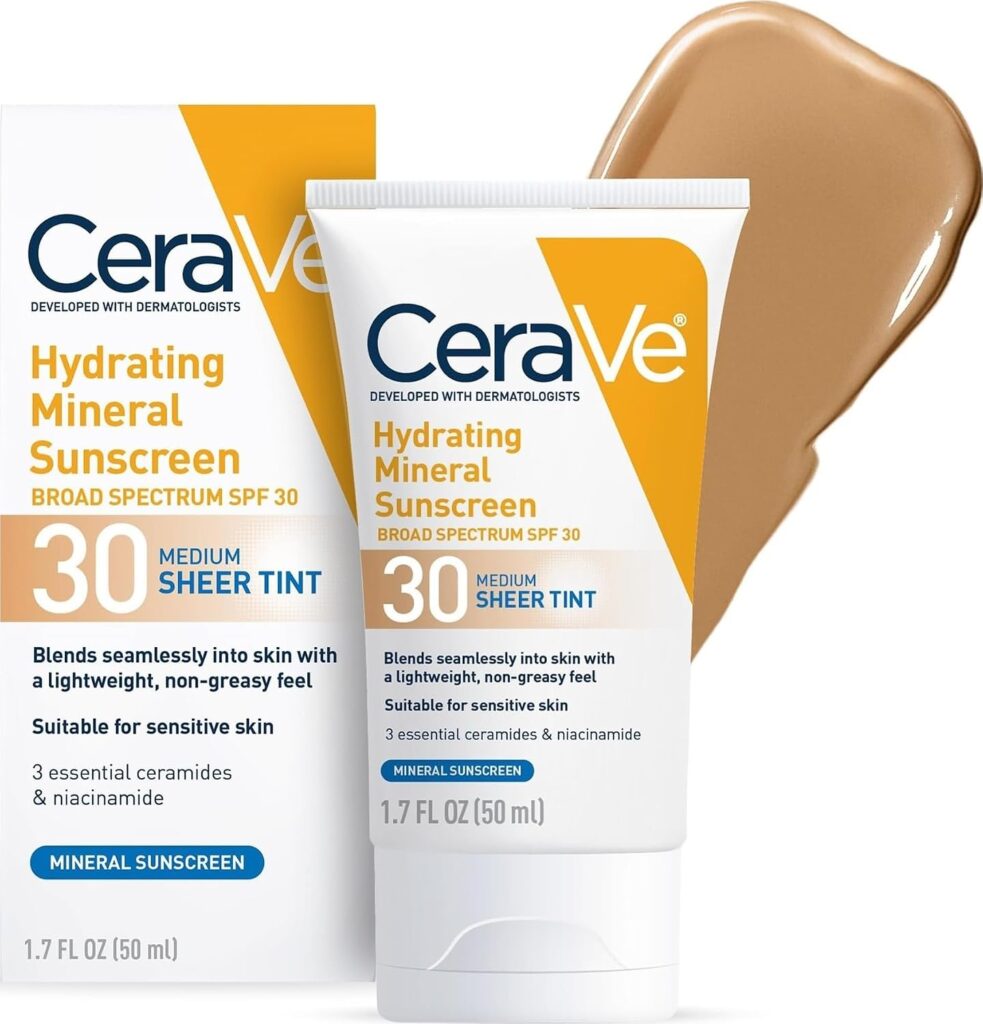
We recommend CeraVe Tinted Sunscreen SPF 30. It uses iron oxides specifically to counteract the white cast that plain zinc oxide and titanium dioxide leave behind, and it comes in three shades (light, medium, deep) so you can actually match it to your skin. It also contains ceramides, supporting your skin barrier while it protects.
Step 2: For a higher-coverage daily option, go with a proven dermatologist favorite
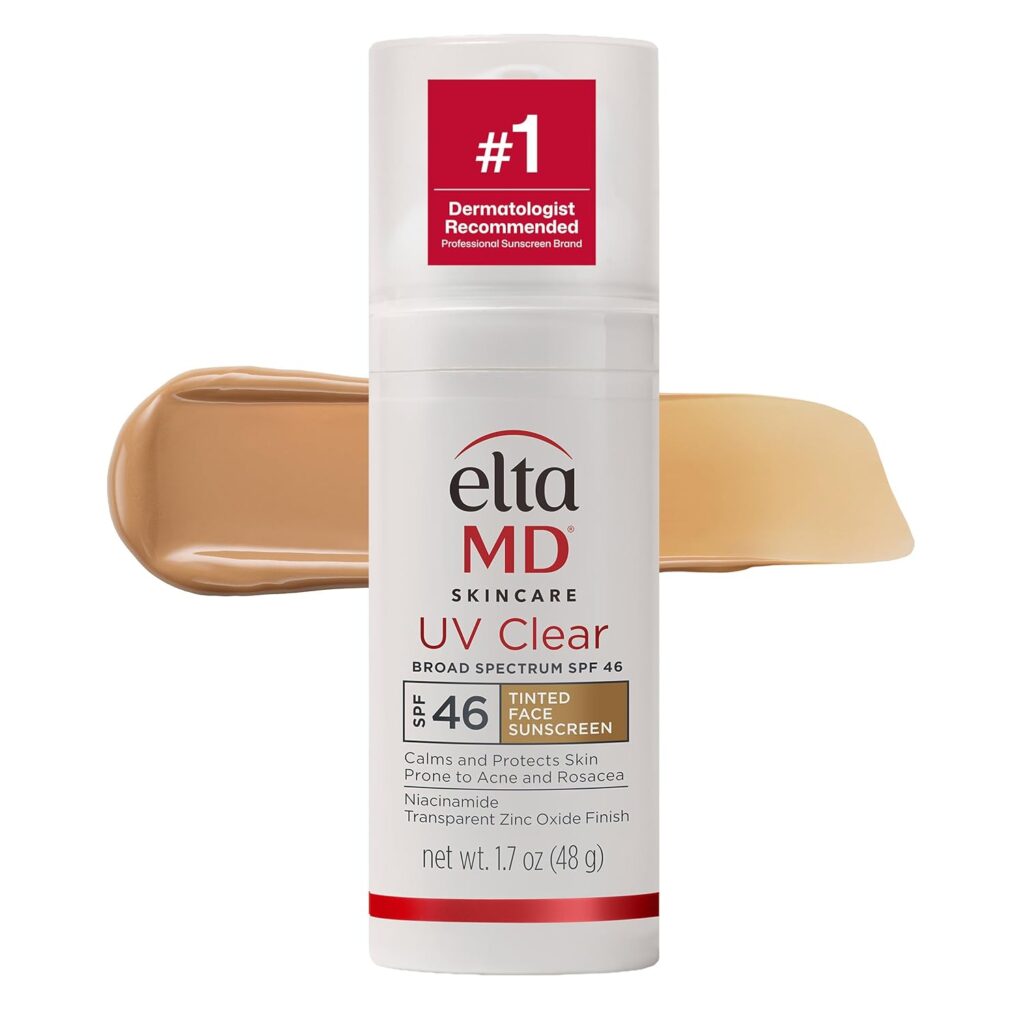
We recommend EltaMD UV Clear Tinted Sunscreen SPF 46. It’s one of the most consistently recommended sunscreens by dermatologists for skin of color specifically, thanks to its iron oxide content and lightweight, non-chalky finish. It also contains niacinamide, which calms inflammation while it protects.
Frequently Asked Questions
Q: Does tinted sunscreen mean I still need foundation or concealer?
Not necessarily. Most tinted mineral sunscreens are designed to even out tone on their own, though the coverage is sheer, not full, so you can still layer makeup on top if you want more coverage.
Q: Are tinted sunscreens as effective as regular ones?
Yes. The tint comes from iron oxides added to the formula, it doesn’t reduce the zinc oxide or titanium dioxide doing the actual UV protection. In some cases, the added iron oxides provide extra protection against visible light that plain sunscreens don’t offer at all.
A Note on Our Approach
This is based on peer-reviewed research indexed on PubMed and clinical literature from dermatology sources, with sources linked throughout for you to verify directly. If you have specific concerns about melasma or ongoing pigmentation, a dermatologist can help identify the right formula and routine for your skin.
Last updated: August 2026