
Most moisturizers promise a lot. Few actually repair anything. The difference comes down to what’s inside — specifically whether the formula contains the three things a dry, compromised barrier actually needs: something to draw water in, something to soften the surface, and something to stop that water escaping again. These four products do all three.
At a Glance
| Product | Key Actives | Best For | Price |
|---|---|---|---|
| La Roche-Posay Toleriane Double Repair | Ceramide-3, Niacinamide, Glycerin | Lightweight daily repair, sensitive skin | ~$25 |
| CeraVe Skin Renewing Night Cream | 3 Ceramides, Hyaluronic Acid, Peptides | Overnight barrier restoration | ~$20 |
| Aquaphor Healing Balm Stick | Petrolatum 30%, Avocado Oil, Shea Butter | Targeted dry patches, on-the-go | ~$10 |
| Vanicream Moisturizing Cream | Ceramides 1 & 3, Cholesterol, Glycerin | Severely sensitive or reactive skin | ~$16 |
The 4 Best Moisturizers for Extra-Dry Skin
1. La Roche-Posay Toleriane Double Repair Face Moisturizer — ~$25
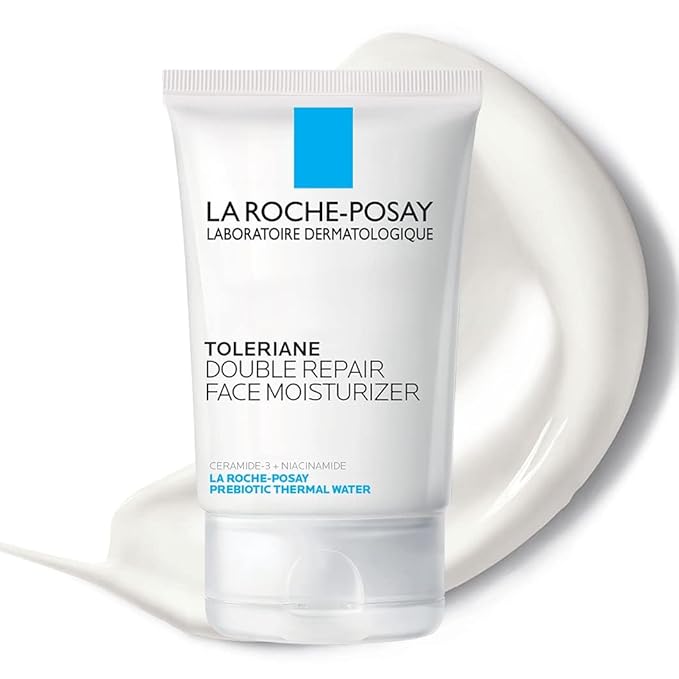
Best for: Lightweight daily barrier repair on sensitive or reactive skin
It works morning and evening, sits comfortably under makeup, and is formulated without fragrance, parabens, or oils — which matters a lot if your dry skin is also prone to sensitivity or redness.
What the ingredients actually do:
Ceramides are lipids your skin naturally produces to hold its barrier together. This specific form, Ceramide NP, is skin-identical, meaning it mirrors what your skin already makes. When your barrier is compromised, ceramide NP helps fill the structural gaps that allow moisture to escape and irritants to get in.
Glycerin — One of the most well-researched humectants in skincare. It works by drawing water molecules from the environment (and from deeper skin layers) into the uppermost layer of your skin. It appears near the top of this ingredient list, meaning it’s present in a meaningful concentration.
Niacinamide (Vitamin B3)— At concentrations of 2–5%, niacinamide is clinically shown to increase ceramide production in the skin over time, reduce water loss across the barrier, and calm visible redness. It also supports the skin’s microbiome balance.
Squalane — A lightweight plant-derived oil (typically from sugarcane) that mimics squalene, a lipid your skin produces naturally but in decreasing amounts with age. It softens without clogging pores and enhances moisture retention.
Dimethicone — A silicone that acts as a lightweight occlusive — it sits on top of skin and slows transepidermal water loss (TEWL) without the heaviness of petrolatum.
La Roche-Posay Prebiotic Thermal Water — Mineral-rich spring water naturally high in selenium, an antioxidant. It forms the base of this formula and contributes to its soothing quality on reactive skin.
Choose this if: You want a lightweight daily moisturizer that repairs your barrier without feeling heavy, clogging pores, or reacting with sensitive skin. Works equally well as a morning moisturizer under SPF.
One thing to know: Contains dimethicone, which some people with silicone sensitivity prefer to avoid. Rare, but worth checking if you’ve reacted to silicone-based products before.
2. CeraVe Skin Renewing Night Cream — ~$20
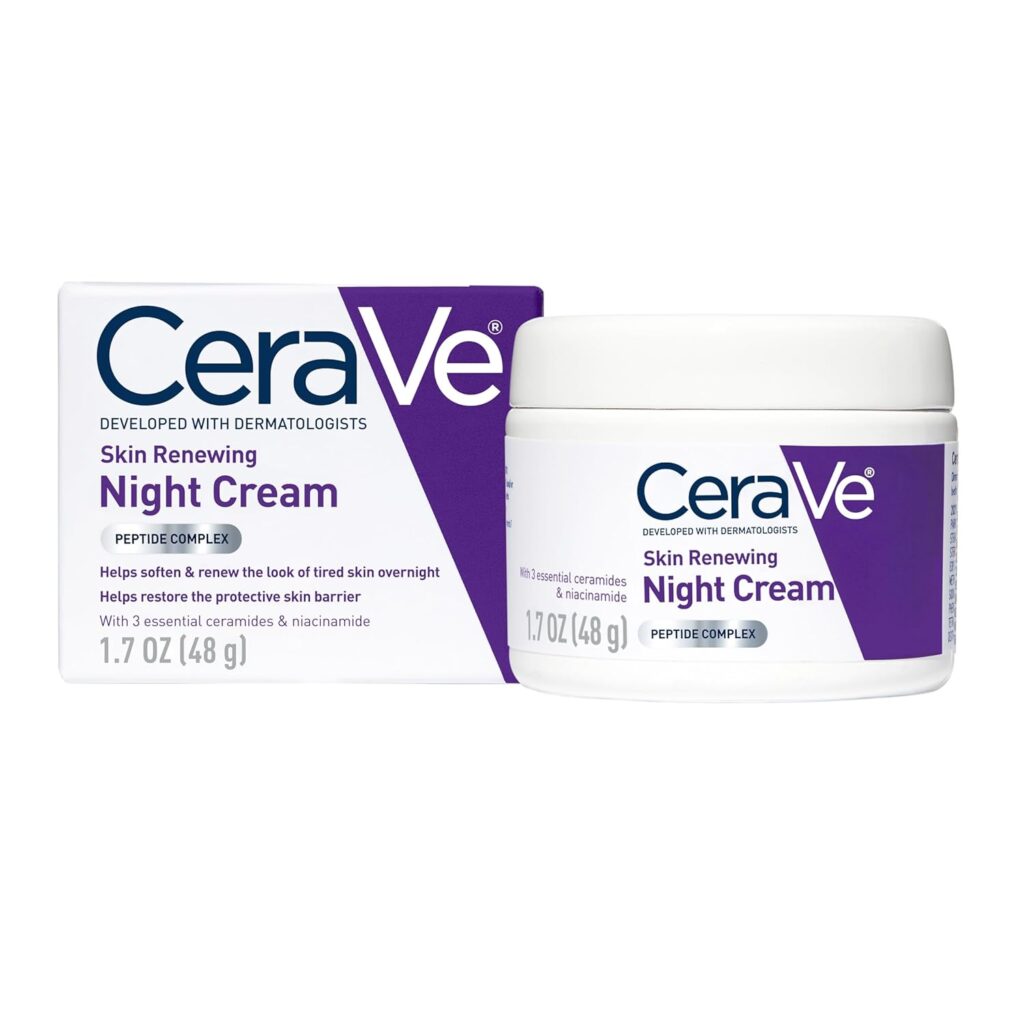
Best for: Overnight barrier restoration when skin is visibly dry, flaky, or fatigued by morning
What the ingredients actually do:
Ceramide NP, Ceramide AP, Ceramide EOP (3 Essential Ceramides) — CeraVe uses three ceramide types together, which is more closely aligned with your skin’s natural lipid ratio than single-ceramide formulas. Ceramide NP retains moisture, Ceramide AP supports barrier integrity, and Ceramide EOP — the rarest of the three — plays a critical role in binding the outermost skin layers together.
Phytosphingosine — A ceramide precursor and lipid that helps stimulate the skin’s own production of ceramides. It also has mild antimicrobial properties and is non-irritating.
Sodium Hyaluronate (Hyaluronic Acid) — The salt form of hyaluronic acid, which penetrates the skin more effectively than standard HA due to its smaller molecular size. Holds up to 1,000 times its own weight in water, making it a powerful short-term hydrator.
Tripeptide-1 and Caprooyl Tetrapeptide-3 — Two biomimetic peptides included at concentrations between 0.3–0.65%. Peptides signal skin cells to support collagen structure and barrier integrity. These specific ones are associated with elasticity and smoothness over continued use.
Shea Butter (Butyrospermum Parkii) — An occlusive and emollient rich in oleic acid. It softens the surface of dry skin and forms a mild protective layer that reduces moisture loss overnight. More nourishing than dimethicone for severely dry textures.
MVE Technology — CeraVe’s patented delivery system encapsulates ingredients in a multi-layer system that releases them gradually over 24 hours rather than in a single dose. This is why one application at night can still be measurable on skin by morning.
Choose this if: Your skin is visibly flaky, rough, or feels stripped by morning. The richer texture and three-ceramide system make this suited for more compromised skin that a lightweight daily formula may not fully address.
One thing to know: The texture is noticeably thicker than a typical moisturizer. It is non-comedogenic and fragrance-free, but if you have oily skin it may feel heavy — this formula is clearly designed for dry to very dry skin types.
3. Aquaphor Healing Balm Stick
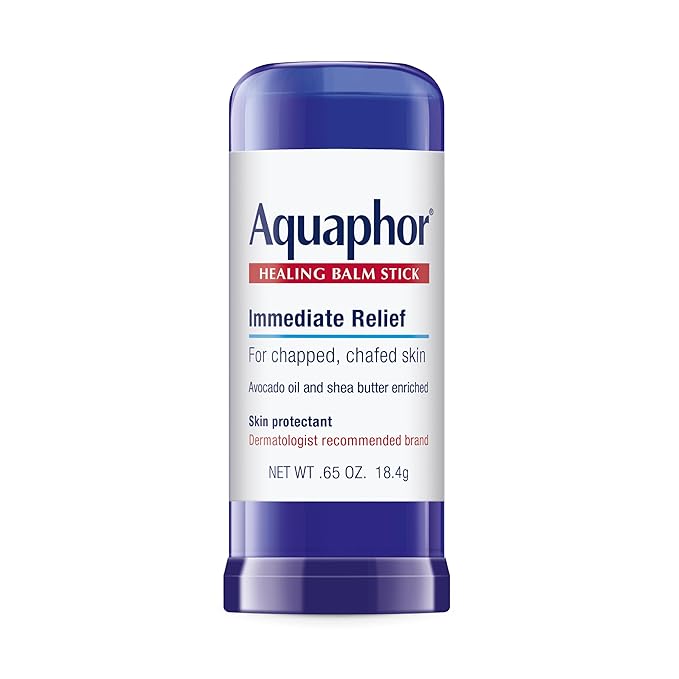
Best for: Targeted dry patches — cracked knuckles, elbows, lips, or any area where standard moisturizer isn’t holding
What the ingredients actually do:
This isn’t your face moisturizer. It’s the product you reach for when a specific area — lips, knuckles, heels, a cracked dry patch — needs something stronger than a cream. Petrolatum-based products like this one work differently from typical moisturizers: instead of adding water to the skin, they create a semi-occlusive seal that dramatically slows water from escaping.
Petrolatum (30%) — The most effective occlusive agent in skincare. It does not absorb into the skin — instead it sits on the surface and creates a physical barrier that dramatically reduces transepidermal water loss (TEWL). Petrolatum is non-comedogenic, hypoallergenic, and has more than 150 years of safe clinical use. At 30% concentration in this stick, it is the dominant active ingredient.
Avocado Oil (Persea Gratissima) — A high-oleic plant oil with exceptional skin penetration. It’s rich in oleic acid (approximately 70%), which softens the upper layers of dry skin and supports absorption of other nourishing ingredients. Also contains vitamins A, D, and E.
Shea Butter (Butyrospermum Parkii) — An occlusive and emollient that complements petrolatum by adding a layer of fatty acids (oleic and stearic acid) that soften and protect. Less greasy than petrolatum on its own.
Panthenol (Pro-Vitamin B5) — Converts to Vitamin B5 on the skin and supports moisture retention at the cellular level. It also has mild anti-inflammatory properties that soothe chafed or irritated skin.
Tocopherol (Vitamin E) — A fat-soluble antioxidant that protects skin lipids from oxidative damage and supports barrier health. Works synergistically with avocado oil.
Bisabolol — A calming ingredient derived from chamomile. Reduces irritation and redness around extremely dry or cracked areas.
Choose this if: You have specific cracked or extremely dry patches that aren’t responding to regular moisturizer — dry lips, cracked heels, winter-chapped knuckles, or elbows. The stick format makes it mess-free and convenient to carry.
One thing to know: The petrolatum base will feel occlusive, which is intentional. Don’t expect it to absorb like a cream — it seals, not absorbs. Avoid applying to breakout-prone areas.
Fun fact — petrolatum, the main ingredient here, is essentially the same thing as Vaseline. The difference is the added avocado oil and shea butter that make it easier to spread and less sticky. It’s one of the most studied skincare ingredients in existence.
4. Vanicream Moisturizing Cream — ~$16
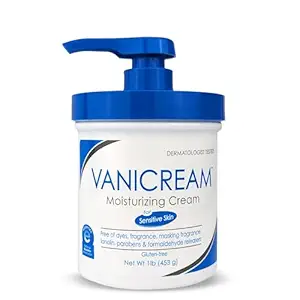
Best for: Severely sensitive, reactive, or eczema-prone dry skin that reacts to almost everything
Vanicream is the pick for readers who’ve tried multiple moisturizers and keep reacting. Its formula is designed around exclusion — no fragrance, no dyes, no lanolin, no parabens, no formaldehyde-releasing preservatives, no botanical extracts — all of which are common causes of contact dermatitis in sensitive skin types. What’s left is a clean, effective barrier cream that works without the risk.
What the ingredients actually do:
Ceramide 1 (EOP) and Ceramide 3 (NP) — Two of the three most abundant ceramide types in healthy skin. Together they support barrier cohesion and moisture retention. While CeraVe uses three ceramides, Vanicream’s two-ceramide approach still covers the most clinically important types for barrier repair.
Cholesterol — An often-overlooked lipid that works alongside ceramides to replicate the skin’s natural lipid ratio. Research shows that ceramides combined with cholesterol and fatty acids repair the barrier more effectively than ceramides alone. Vanicream includes cholesterol specifically to achieve this synergy.
Glycerin — High-concentration humectant that pulls moisture into the skin’s surface layer. Present near the top of Vanicream’s ingredient list indicating a meaningful amount.
White Petrolatum — A small amount of petrolatum provides an occlusive layer that reduces moisture loss, especially useful for very dry or eczema-prone skin that needs a physical seal.
Sorbitol — A sugar alcohol that functions as a humectant and helps stabilize the formula’s moisture-binding capacity over time.
Choose this if: Your skin is reactive, eczema-prone, or you’ve had contact dermatitis from other moisturizers. The extremely clean formulation removes almost every common allergen while still delivering real ceramide-based barrier repair.
One thing to know: The texture is thick and takes a moment to absorb. This is by design — it is a clinical barrier cream, not a lightweight daily moisturizer. If you need something lighter for daytime, pair with the La Roche-Posay Toleriane for mornings and use Vanicream at night.
How to Choose Between These Four
You want a lightweight everyday moisturizer → La Roche-Posay Toleriane Double Repair. It’s the only one here light enough to wear under SPF and makeup daily without residue.
Your skin is noticeably dry, rough, or flaky by morning → CeraVe Skin Renewing Night Cream. Its richer texture and three-ceramide + peptide system are designed specifically for repair during overnight hours.
You have a specific cracked, chapped, or severely dry area → Aquaphor Healing Balm Stick. Apply directly to that area — not your whole face — for targeted occlusive protection.
Your skin reacts to most products or you have eczema → Vanicream Moisturizing Cream. The cleanest formulation in this list by a significant margin.
What to Look for in a Moisturizer for Extra-Dry Skin
Any product worth using for a compromised, extra-dry barrier should include at least one of each of the following three ingredient types:
A humectant — something that draws water into the skin. Look for glycerin, sodium hyaluronate, or sorbitol near the top of the ingredient list.
An emollient — something that smooths and softens the skin’s surface. Ceramides, fatty acids like shea butter, squalane, and plant oils all qualify.
An occlusive — something that seals moisture in. Petrolatum, dimethicone, and shea butter all provide varying degrees of occlusivity.
Avoid products that list fragrance, denatured alcohol (alcohol denat.), or essential oils high on the ingredient list if your skin is prone to sensitivity — these actively disrupt the barrier you’re trying to rebuild.
A Note on Our Approach
This analysis is based on verified ingredient lists sourced from official brand sites, FDA databases, and INCIDecoder — cross-referenced across multiple sources. We have not personally tested these products. Our focus is on what the formulations are designed to do based on their ingredients, concentrations, and the published science behind each active. We flag honest caveats — including where formulas have limitations — rather than presenting every product as universally suitable.
Last updated: AUGUST 2026